Managed cybersecurity services help mid-market businesses reduce risk, support compliance, protect operations, and scale securely.
From what C-suite leaders tell us, you don’t wake up thinking about cybersecurity tools. You wake up thinking almost forensically about risk, compliance obligations, insurance requirements, and the operational vulnerabilities that could slow growth.
Many of those concerns now have a cybersecurity dimension. Cloud platforms, hybrid work, connected systems, and third-party vendors have made cybersecurity part of business operations rather than a standalone IT function.
As a result, cybersecurity services for businesses are increasingly focused on operational resilience as much as technical protection.
A ransomware attack, compliance failure, or security/data breach can disrupt your operations, damage customer trust, and create unwanted costs.
Strong cybersecurity risk management helps you reduce those risks while supporting growth.
This guide explains what managed cybersecurity services include, why mid-market businesses face growing security challenges, and how the right strategic approach at board level can support both risk reduction and long-term business goals.
Table of contents
Why Cybersecurity Has Become a Business-Level Priority
What Managed Cybersecurity Services Actually Include
Why Mid-Market Businesses Are Increasingly Vulnerable
The Business Benefits of Managed Cybersecurity Services
How Managed Cybersecurity Supports Compliance and Risk Management
What to Look for in a Managed Security Services Provider

Why Cybersecurity Has Become a Business-Level Priority
Cybersecurity has become a business-level priority because technology now underpins almost every aspect of how you operate, serve customers, and grow.
Security failures no longer affect only IT systems. They can disrupt operations, create compliance issues, damage customer trust, and introduce unexpected costs.
The Growing Connection Between Business Operations and Cybersecurity
Cloud platforms, hybrid work, connected systems, and third-party vendors have transformed the way you operate. You now rely on cloud security services and connected applications to support most of your critical business functions.
And as you become more connected, cybersecurity becomes harder to separate from day-to-day operations.
Protecting data, systems, and users is now part of protecting productivity, customer relationships, and business continuity. Which is why cybersecurity increasingly sits on the C-suite agenda.
Why Reactive Security Models No Longer Work
Cybersecurity threats for businesses continue to evolve, especially with AI-orchestrated attacks – while insurers, customers, regulators, and business partners increasingly expect you to demonstrate strong security controls and governance.
As a result, cybersecurity risk management has become an ongoing business function rather than an occasional IT project.
You need a cybersecurity strategy that helps you identify risks, respond to threats, and support long-term growth.

What Managed Cybersecurity Services Actually Include
Most cybersecurity managed services fall into four broad areas: visibility, protection, response, and governance.
Visibility and Monitoring
Visibility typically means cybersecurity monitoring, 24/7 threat detection, vulnerability assessments, and reporting designed to identify potential issues before they become operational problems.
Protection and Prevention
This layer focuses on reducing vulnerabilities and limiting exposure. Typical managed IT security services include:
- endpoint protection services
- network security solutions
- security patching
- cloud security oversight
Response and Recovery
Even strong defenses can’t eliminate every risk. Effective cybersecurity managed services include incident response planning, containment procedures, and support for business continuity and disaster recovery.
Governance and Access Control
Strong IT security management also requires clear policies and oversight. This includes identity and access management, risk assessments, compliance support, and executive reporting that helps leadership understand security risks and priorities.
Basic IT support typically focuses on fixing technical issues when they occur.
Managed IT services take a broader approach to maintaining systems and infrastructure.
Managed cybersecurity services add continuous security monitoring, risk management, and strategic oversight.
Some organizations choose co-managed security partnerships and IT services, combining internal resources with external cybersecurity expertise.

Why Mid-Market Businesses Are Increasingly Vulnerable
Growth creates complexity as well as opportunities. Systems multiply. More users need access. More vendors connect to your environment. You add new applications to solve immediate business problems. Together, these changes can create security blind spots.
When Business Growth Outpaces Internal Security Resources
As your business grows, technology often evolves faster than the processes designed to manage it. Responsibilities shift between internal teams and external providers.
Without strong IT infrastructure management, it becomes harder to maintain visibility across your entire environment.
This is one reason managed cybersecurity services for mid-market businesses have become increasingly important. They help you maintain oversight as complexity grows.
The Hidden Costs of Security Gaps
Security gaps often only emerge when an insurance review raises concerns, a customer asks difficult questions about security controls, or a compliance assessment uncovers weaknesses.
The consequences of security gaps can include operational disruption, reputational damage, increased insurance requirements, and challenges in meeting vendor expectations.
The paradox is that your growth is what can create these blind spots and expose weaknesses.
It therefore makes sense to invest in cybersecurity solutions for growing companies before problems appear rather than after them. The benefits quickly become obvious…

The Business Benefits of Managed Cybersecurity Services
The value of managed cybersecurity services extends beyond technology. Effective business cybersecurity solutions help you reduce risk, strengthen your operations, and support sustainable growth goals:
Better Visibility Into Risk
You can’t manage risks you can’t see. Managed cybersecurity services provide greater visibility into vulnerabilities, security gaps, and emerging threats. This helps you make more informed decisions about priorities and investments.
Faster Response and Greater Operational Resilience
Security incidents can disrupt operations, delay projects, and divert resources from strategic objectives.
Continuous monitoring, proactive IT support, and defined response processes help you identify and address issues more quickly – while reducing operational impact.
Predictable Security and IT Operations Management
Many organizations struggle with balancing security requirements against day-to-day operational demands.
Managed services provide predictable cybersecurity support services and specialist expertise. By contrast, building and maintaining every capability internally can create gaps in coverage, skills, and oversight.
More consistent IT operations management, clearer accountability, and improved alignment between security and business goals give you confidence.
Supporting Growth Without Expanding Internal Headcount
Managed cybersecurity services provide access to specialist skills and continuous oversight without requiring you to build large in-house security teams.
Modern cybersecurity increasingly operates as a continuous function rather than a periodic project. Capabilities such as advanced monitoring and Managed Detection and Response (MDR) help you maintain ongoing visibility into threats while supporting your long-term growth and resilience.
How Managed Cybersecurity Supports Compliance and Risk Management
Cybersecurity compliance is no longer driven solely by regulation. Your customers, insurers, vendors, and business partners now expect evidence that you have appropriate security controls and risk management processes in place.
Building a Repeatable Security Framework
Effective cybersecurity risk management relies on a repeatable framework supported by policies, risk assessments, documentation, and ongoing review.
You can use established frameworks such as NIST to help guide security planning and decision-making. These frameworks provide structure for identifying risks, implementing controls, and demonstrating due diligence over time.
Managed cybersecurity providers and cybersecurity consulting services can help you develop, maintain, and improve these processes without placing additional strain on your internal teams.
Meeting Industry and Vendor Expectations
Our long experience in Columbia, Spartanburg, and the Carolinas tells us that security expectations continue to rise across your regional industries – including healthcare data security, cybersecurity compliance for financial services, industrial control systems in manufacturing, and government contracting.
In many cases, you have to complete security questionnaires, demonstrate compliance controls, or provide evidence of risk management practices before contracts are awarded or renewed.
A mature cybersecurity program helps you respond to these requirements more confidently. You reduce the administrative burden of audits, assessments, and vendor reviews.
What to Look for in a Managed Security Services Provider
Not all providers take the same approach to cybersecurity. Some focus primarily on responding to technical issues as they arise.
Others, like Katalyst, work alongside your leadership team to reduce risk, improve resilience, and support your long-term business goals with a clear strategy.
Ongoing Not Reactive Support
A strong managed security services provider should offer more than monitoring and incident response.
Security decisions affect your operations, compliance, growth, and business continuity – which means these require planning as well as technical expertise.
Look for a provider that can support your cybersecurity strategy, governance, risk assessments, and ongoing planning rather than simply reacting to individual issues as they occur.
The goal is to build a security approach for you that remains effective as your business evolves.
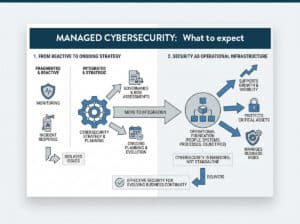
Security as Part of Your Operational Infrastructure
The most effective managed IT security services recognize that cybersecurity doesn’t operate in isolation. It’s connected to your systems, processes, people, and business objectives.
That’s why it makes sense to move away from fragmented technology management toward a more integrated approach.
Security then becomes part of the operational foundation that supports how your business connects, protects your critical assets, and operates securely day to day.
When you treat cybersecurity as operational infrastructure rather than a standalone IT function, it becomes easier to support your growth, maintain visibility across your business – and manage the many risks that might keep you awake at night!
Katalyst Managed Cybersecurity Services Help You Reduce Risk and Scale Securely
Cybersecurity is no longer a standalone IT concern. It’s now part of how you manage risk, support compliance, protect operations, and pursue growth.
As technology environments become more complex and threats continue to evolve, managed cybersecurity services provide the expertise, monitoring, governance, and strategic support you need to build a more resilient business.
Whether you’re evaluating your current security posture or planning for future growth, the right approach can help you reduce risk while supporting long-term operational success.
Our Katalyst experts are happy to discuss security assessments, managed cybersecurity services, strategic IT planning, or risk reduction initiatives. Call us today and let’s talk strategy.